
Food Facility Inspection Process
Since 1963, the Riverside County Department of Environmental Health has been conducting inspections and issuing grades to all food facilities that handle open food. These facilities include restaurants, bakeries, delis, bars, and similar establishments. Throughout the year, these facilities undergo unannounced inspections to ensure compliance with health and safety regulations. Following each inspection, the facility receives a grade reflecting its adherence to these standards. This grade is required to be displayed in a publicly visible location, typically near the main entrance or at the front register, to inform customers of the facility’s current health inspection status.
Food Facility Grading
Food Facility Quick Links
Facility Self-Inspection Links
Environmental Health Inspector Perspective
This video features an Environmental Health Inspector being interviewed on the topics of food safety and restaurant inspections. The inspector shares expert insights into the goals and procedures of routine health inspections. The discussion covers a range of important topics, including proper food handling and storage practices, sanitation and hygiene requirements, temperature control, prevention of cross-contamination, among others.
Throughout the interview, the inspector emphasizes the vital role these inspections play in protecting public health and ensuring that food establishments maintain safe and sanitary conditions. The video serves as an educational resource for restaurant operators, food workers, and the general public to better understand the standards and expectations that guide safe food service operations.
RESTAURANT INSPECTION GRADES
Image
Image
Image
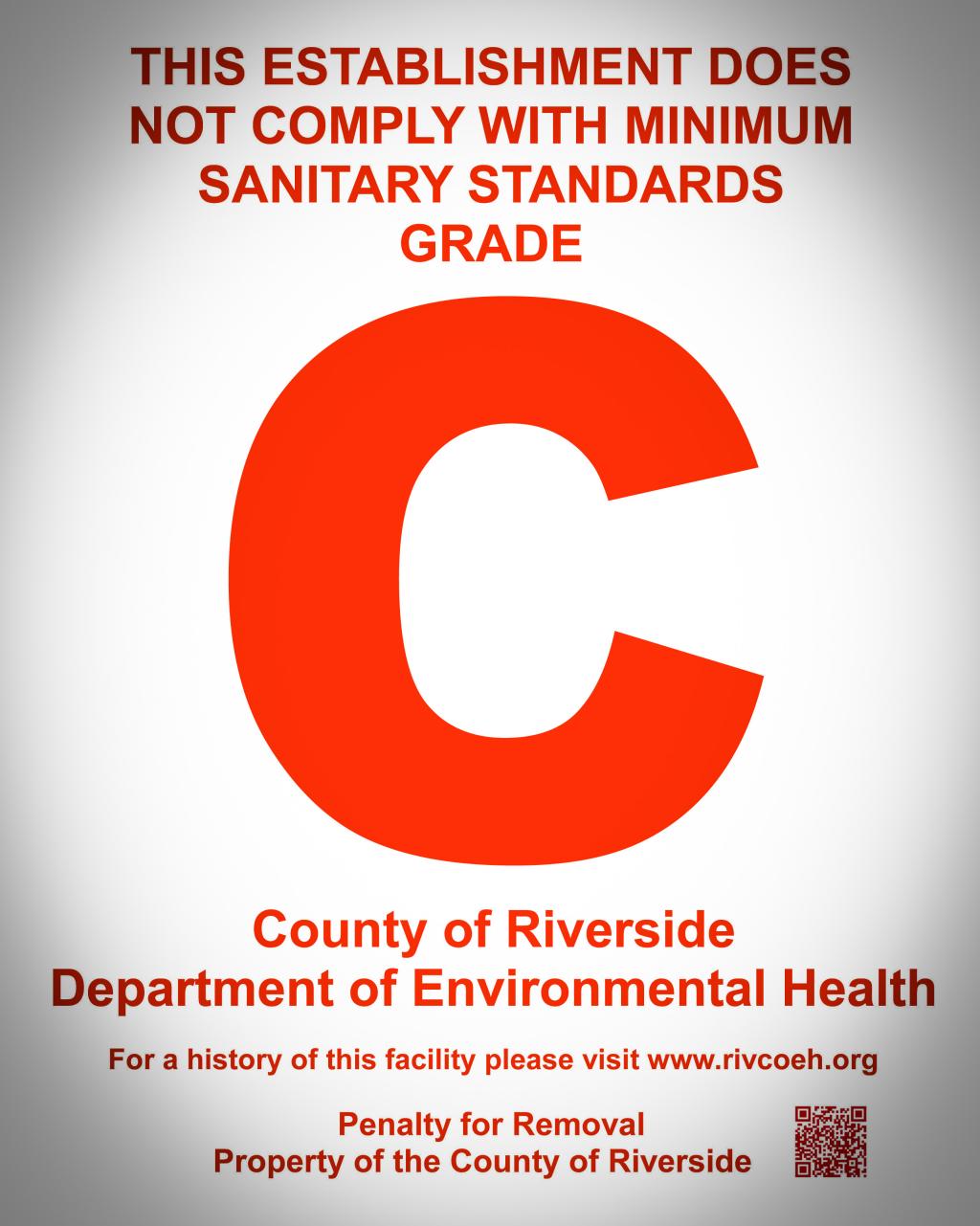
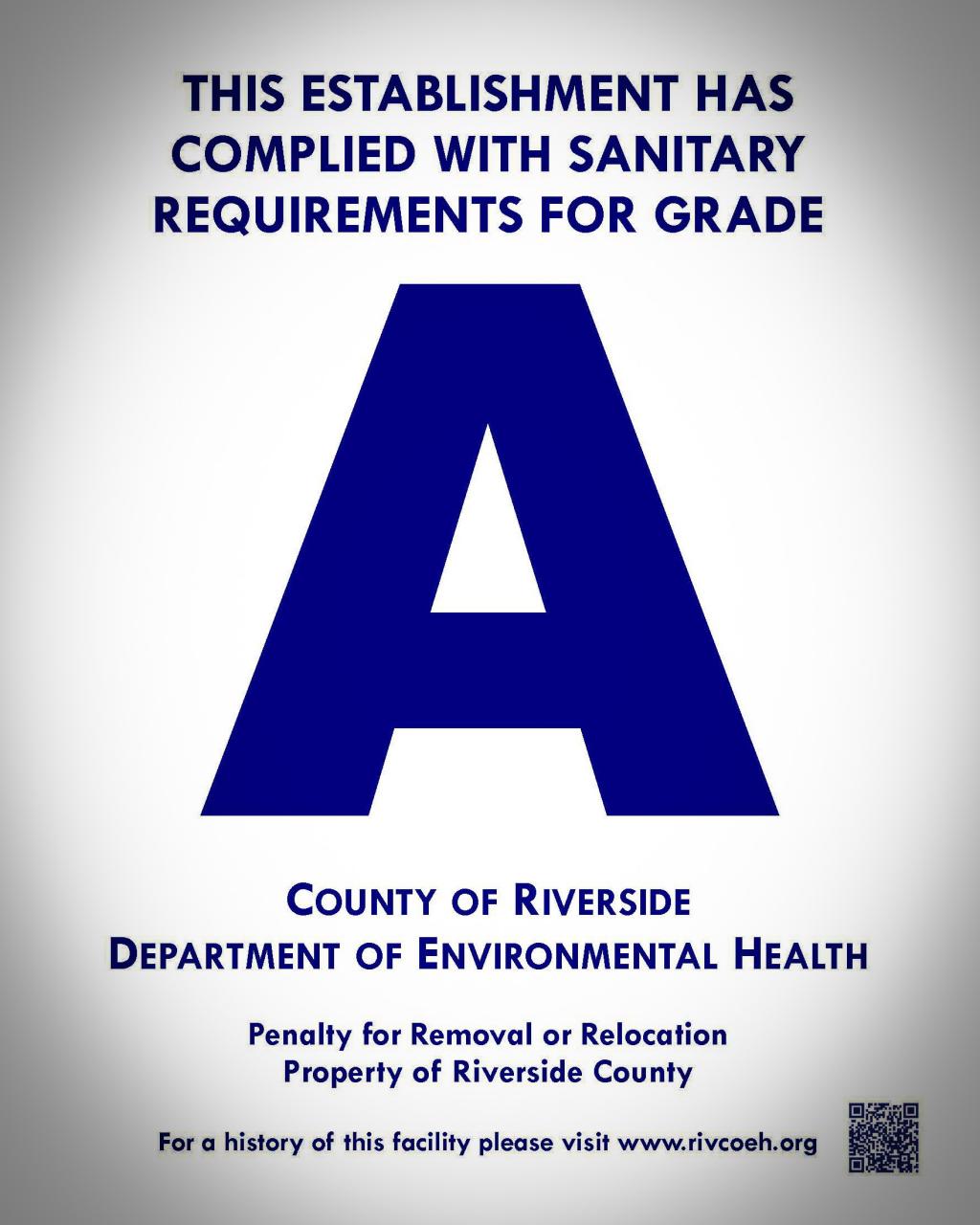
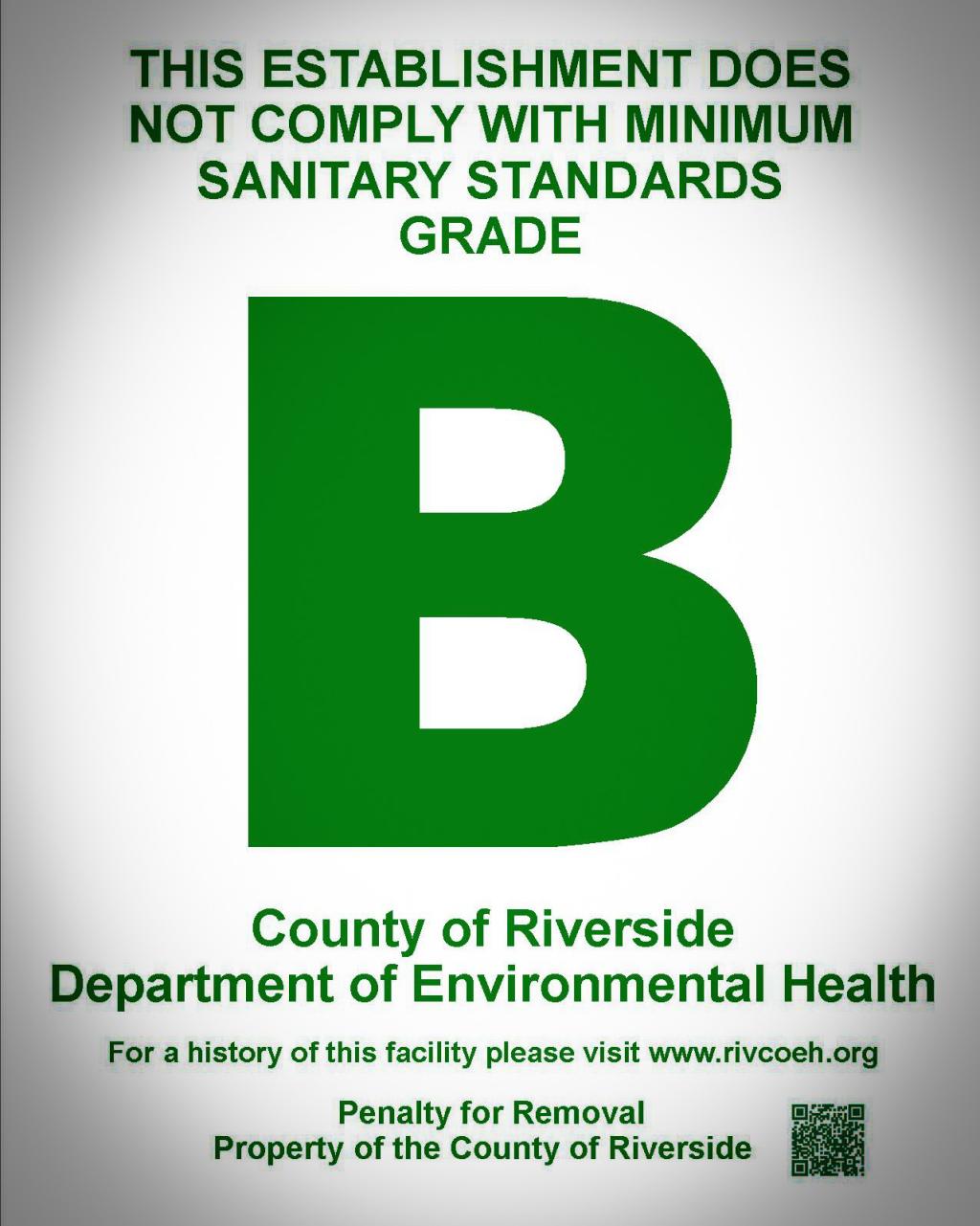
Restaurant Inspection Grades
Permanent food establishments that handle open food items are subject to routine health inspections conducted by this Department. At the conclusion of each inspection, a grade is issued based on the facility’s compliance with health and safety standards.
There are three possible grades:
Grade A – Score range 100-90. Indicates full compliance with minimum health standards. This is the only passing grade.
Grade B – Score range 89-80. Indicates that the facility did not meet minimum health standards. This is considered a downgrade.
Grade C – Score range 79 and below. Indicates significant non-compliance with health standards. This is also a downgrade.
Facilities that receive a Grade B or C are required to correct all violations and undergo a re-inspection. A facility must achieve a Grade A on the re-inspection in order to be considered in compliance. Re-inspection is typically conducted within a week of downgrade.
Grade Card (Placard) Display Requirements
All facilities must display their official grade card in a location that is clearly visible to the public, such as near the main entrance. Grade cards may only be moved or removed by authorized personnel from this Department.
MAJOR VIOLATIONS IN FOOD FACILITIES
Image

Image

Image

Major Violations in Food Facilities
According to California Health and Safety Code (CalCode) Section 113821, a major violation is defined as a condition that presents an imminent health hazard and requires immediate corrective action, which may include the closure of the facility to protect public health.
In Riverside County, the following are examples of violations that are classified as major due to their potential to cause foodborne illness or otherwise compromise food safety. These violations are considered critical and must be addressed without delay:
Failure to report or control communicable diseases, or not following restrictions and exclusions for ill food workers
Improper handwashing or incorrect use of gloves
Improper hot or cold holding temperatures for potentially hazardous foods
Incorrect use of time as a public health control, including missing or inaccurate procedures and records
Inadequate cooling methods that do not meet food safety requirements
Improper cooking temperatures or times, especially for foods requiring specific internal temperatures
Improper reheating procedures for foods intended for hot holding
Contaminated, spoiled, or adulterated food
Food contact surfaces that are not properly cleaned and sanitized
Food obtained from unapproved or unlicensed sources
Prohibited foods served in licensed healthcare facilities or schools
Lack of hot and cold running water
Improper sewage or wastewater disposal
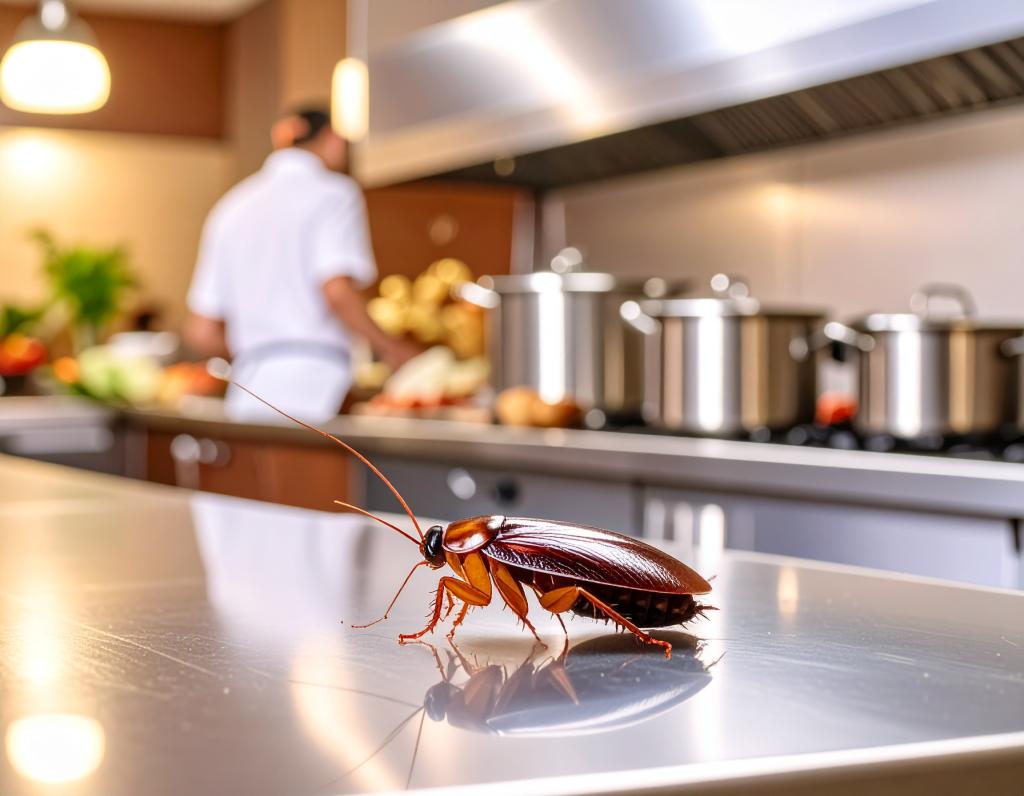
Presence of vermin, such as rodents, insects, birds, or other animals in food preparation or storage areas
These violations pose a direct threat to consumer health and must be corrected immediately to ensure the continued safe operation of the facility.
FOOD FACILITY CLOSURE
Image
Image
Image

Reasons for a Closure
There are circumstances in which a facility operator must make the difficult decision to temporarily close their establishment in order to protect the health, safety, and well-being of the public. These situations may arise due to a variety of factors, including but not limited to:
- Insufficient Refrigeration
- No Electricity
- Vermin Infestation
- No Hot and/or Cold Running Water
- Plumbing Backup
- Lack of Food Safety Knowledge by Employees
- Any Condition That Might be Found to Represent a Potential Threat to the Public